Lawyers ask for ethics guidance G. Michael Witte, Executive Director | Disciplinary Commission In April 2018, the Disciplinary Commission began providing Indiana lawyers informal ethics guidance and formal advisory opinions. Informal guidance allows a lawyer to confidentially submit an ethical conduct question. The process is known as a pointer system: the Commission points the lawyer to applicable rules, official … [Read more...] about In the Right Direction
Ethics
Following your Friends to a Faulty Connection

By Marcus Alan McGhee | Staff Attorney, Indiana Commission on Judicial Qualifications A Snapshot of New Social Media Challenges Judiciaries across the nation appear to have received the message from judicial conduct commissions regarding vitriolic posts on social media platforms. Such commentary has been condemned as indecorous and lacking the unbiased impartiality required from the bench. However, as judicial … [Read more...] about Following your Friends to a Faulty Connection
The problem exists

By Brenda Rodeheffer | General Counsel for Personnel & Operations The “Me Too” movement caught fire last October, and there is no sign that it is burning out. Sexual harassment as a cause of action was recognized in 1986 in Meritor Savings Bank v. Vinson. Multiple landmark Supreme Court cases through the years have expanded the scope of sexual harassment to include same sex harassment and vicarious liability for e … [Read more...] about The problem exists
Disciplinary Commission providing Ethical Guidance
By G. Michael Witte | Executive Director, Indiana Supreme Court Disciplinary Commission Beginning in Spring 2018, for the first time in its history, the Indiana Supreme Court Disciplinary Commission will undertake an advisory role as a part of its official duties. Ethical guidance will be provided through formal written opinions and informal individual guidance. Formal written opinions will be published and serve to … [Read more...] about Disciplinary Commission providing Ethical Guidance
#CanITweet? Guidance to courts on the limits of Broadcast Ban
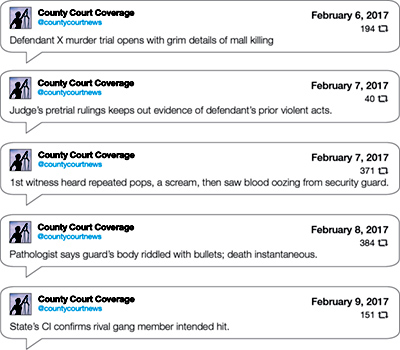
Described by some as “Haiku journalism,” the 140-character limit of Twitter messages such as the fictional examples below, may seem to provide only short-script descriptions of legal events, but these abbreviated statements are beginning to impact court systems. As reporters and onlookers can give play-by-play-accounts of what is occurring in the courtroom and even include photos or videos on Twitter, courts are wre … [Read more...] about #CanITweet? Guidance to courts on the limits of Broadcast Ban