By Hon. Brant J. Parry | Howard Superior Court 2
On April 16, 2019, the Grim Reaper walked the halls of Western High School in Howard County, entered a classroom every quarter hour, and pulled out a student. It was the beginning of a two-day program called “Every 15 Minutes,” named so because in the early nineties in the U.S., that’s how often an alcohol-related traffic fatality occurred.
A month earlier, the Western High School faculty advisor reached out to me and asked if I would participate in the program. She asked if I could advise them on how a charge of “OWI, Causing Death” would work its way through the criminal system and assist the script writers with an accurate and authentic court scene. I immediately agreed, and after one call to the Office of Judicial Administration to confirm we could film in the courtroom, we were off and running.
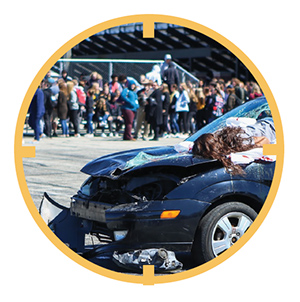
“The ‘Every 15 Minutes’ presentation is a powerful illustration of how impaired or distracted driving can impact and take lives, and shows how quickly, and unintentionally, this can happen,” explained Randy McCracken, Western School Corporation Superintendent. The program helps students understand the real-life effects of impaired or distracted driving without experiencing the real-life consequences. Faculty and students at Western High School—along with a coalition of local agencies—spent nearly a year planning this life-changing program.
During the first day, after the Grim Reaper called a student out of class, a police officer entered the class and read the student’s obituary. For the rest of the day, that student could not interact with the other students.
After lunch, a simulated traffic collision was viewable in the school parking lot. Rescue workers pulled the “injured” from the wreckage and paramedics treated them, while the coroner dealt with the “fatalities.” Police investigated and arrested the “drunk driver,” who was booked in jail and brought to court for a hearing, where he and his parents made emotional pleas to the Court. Ultimately, the driver was sentenced, handcuffed, and remanded to the Sheriff.
Watch day one video at youtu.be/hZcOta2s39M
On day two, a convocation of the entire student body took place, where students watched a video of the previous day’s events. Some students who participated on day one shared their experiences. Two guest speakers spoke to the student body about their personal loss as a result of impaired or distracted driving. Day two culminated in a call to action challenging the students to make responsible choices while driving. Finally, the “living dead” students were reunited with their parents.
Faculty Advisor Lynn Guinn said, “This was a very ‘eye opening’ experience for our entire student body and staff. The two-day program was full of emotion and provoked a lot of discussion.”
As judges and leaders, it is important that we stay involved in our communities. It is vital that members of our communities, and specifically the youth, do not see judges as unapproachable people, wearing black robes, sitting high on a bench, looking down on everyone before them. We need to build bridges in the community. We are human beings who care deeply about people and do our best to make informed and thoughtful decisions. By staying active in our communities and with the youth, we take a huge step in bridging the gap.